The Visual Culture (VIC) Working Group will be holding online elections for one co-Chair and one Vice-chair positions, for the term 2026–2030.
The elections will be held online from 13 to 27 May using the SurveyMonkey platform.
Individual members and representatives of institutional members in good standing who are also registered members of the Visual Culture Working Group by 8 May are eligible to vote.
To verify if you are a member of the VIC Working Group, log in to your IAMCR account and select “My Sections and Working Groups” from the menu.
View the candidates and read their statements below.
More information and timeline are available at https://iamcr.org/s-wg/elections2026
Read more about the Visual Culture Working Group
Candidates
Co-Chair
Vice-chairs
- Kun Fang (Frank), Beijing Normal-Hong Kong Baptist University, China
- Fatma Nazlı Köksal, Yeditepe University, Türkiye
- Sheila Joy Mulinya, Daystar University, Kenya
- Meera Shirodkar, Bennett University, India
- Yaohan (Quentin) Wang, Communication University of China
- Zhaoyin Zhang, University of Limerick, Ireland
Statements
Co-Chair
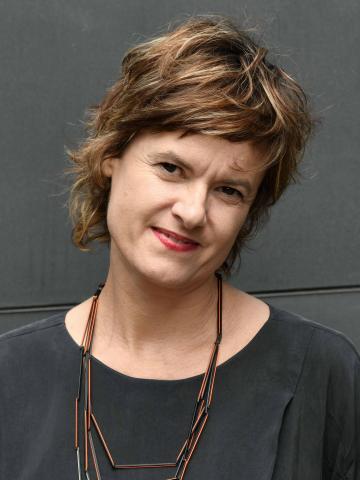
Ella Raidel
Nanyang Technological University, Singapur
I am writing to express my interest in the position of Co-Chair of the Visual Culture Working Group within IAMCR for the term 2026–2030.
I first became closely acquainted with the Working Group while presenting at the IAMCR Conference 2025 in Singapore, hosted at Nanyang Technological University, where I have been serving as Assistant Professor at the School of Art, Design and Media for the past seven years. What stood out to me was the intellectual rigor and conceptual openness of the program, particularly the selection of papers engaging critically with contemporary visual culture across diverse methodological and geopolitical contexts. The Working Group fosters a space that resonates strongly with my own practice and research.
As a filmmaker, visual artist, and interdisciplinary researcher, my work operates at the intersection of cinema, immersive media, and artistic research. I approach filmmaking not primarily as a representational medium but as a method of inquiry—one that unfolds through performative documentary practices and expanded cinematic forms. My projects investigate ecological imaginaries, urban transformation, and the shifting conditions of contemporary existence, often through site-specific, participatory, and immersive formats such as 360° film and VR. This practice-based approach is closely aligned with emerging debates within visual culture studies that seek to rethink the role of images beyond fixed meaning, emphasizing process, embodiment, and relationality.
During the conference, I was encouraged by your invitation, Denize, to contribute more actively to the Working Group in the future. I see the role of Co-Chair as an opportunity to support and further develop this dynamic platform. In particular, I am interested in strengthening connections between artistic research, moving image practices, and critical theory, while also expanding the scope of contributions from regions such as Southeast Asia, where visual culture is rapidly evolving in response to technological, ecological, and social transformations.
In my current academic role, I have been actively involved in organizing international screenings, symposia, and collaborative research initiatives that bring together scholars, artists, and practitioners. These experiences have equipped me with the organizational and curatorial skills necessary to contribute to the Working Group’s activities, including conference programming, peer review processes, and the facilitation of scholarly exchange.
If appointed, I would aim to support the Working Group in fostering an inclusive and forward-looking environment that engages with new forms of visuality, including immersive media, post-cinema, and expanded documentary practices. I am particularly committed to encouraging interdisciplinary dialogue and creating space for practice-based and experimental contributions that challenge conventional academic formats.
I would be honored to contribute to the continued development of the Visual Culture Working Group and to support its role within IAMCR as a critical forum for discussing the transformations of visual media in contemporary society.
Thank you for your consideration.
Sincerely,
Ella Raidel
Vice-chair
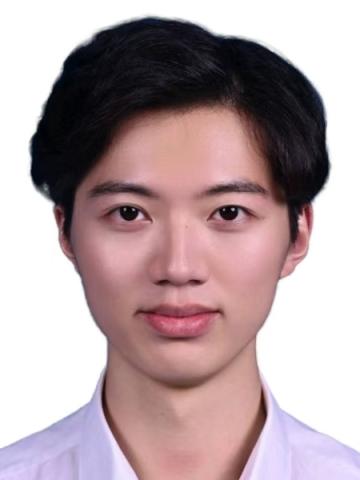
Kun Fang (Frank)
Beijing Normal-Hong Kong Baptist University, China
My name is Kun Fang (Frank), and I am currently a Ph.D. student supported by a full scholarship. I hold a B.A. in Journalism from Anhui University of Arts and an M.A. in Communication with distinction from Hong Kong Baptist University. My research focuses on political communication, audience effects, and visual communication, with particular attention to how visual forms shape cultural memory, public discourse, and power relations.
I am standing for the Vice-chair position in the Visual Culture Working Group because I hope to contribute to an inclusive, internationally engaged, and intellectually open community of scholarship. My recent research has examined war photography, cinematic representation, online violence, platform identity, and the politics of visibility. Through participation in IAMCR and ICA conferences, as well as publications in journal articles, book chapters, and oral history volumes, I have developed a strong commitment to interdisciplinary scholarship and cross-regional dialogue in visual culture.
Alongside my academic work, I have also been actively involved in documentary and media production as an assistant director, planner, and director. Several of these projects received recognition in major national competitions in China. This experience has given me practical insight into how visual narratives are produced, circulated, and interpreted across different cultural and public contexts. It has also strengthened my ability to collaborate effectively, manage responsibilities across different stages of a project, and connect critical research with media practice.
My experience as a research assistant has further prepared me for a service role within an international academic community. I have supported faculty-led research through literature review, data organization, research coordination, and academic writing preparation. These responsibilities have helped me develop the organizational skills, reliability, and attention to detail needed for supporting conference programming, maintaining communication with members, and contributing to the broader work of the Working Group.
If elected as Vice-chair, I would work to encourage participation from early-career researchers, promote dialogue across regions and methodological traditions, and support exchanges that connect theory with practice. I would be honored to contribute to the continued development of the Working Group through active, responsible, and collaborative service.
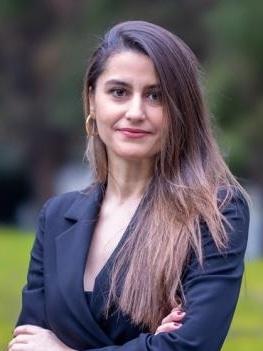
Fatma Nazlı Köksal
Yeditepe University, Türkiye
I am honored to submit my candidacy for the Vice-Chair position within the Visual Culture (VIC) Working Group. I currently serve as a faculty member in the Department of Advertising Design and Communication at Yeditepe University (Türkiye) and also hold the position of Vice Dean. I believe that my academic and administrative experience can make a meaningful contribution to the interdisciplinary and international mission of the VIC Working Group.
My research centers on visual rhetoric, representation, aesthetics, and the processes through which meaning is constructed. I have specifically proposed a visual rhetoric framework grounded in the “triadic approach”- encompassing intellectual knowledge, visual representation, and aesthetics—with the goal of offering both theoretical and methodological contributions to visual culture studies. Moreover, my investigations into metaphorical representation and aesthetics in advertising, the visual portrayal of food in Italian cinema, and visual semiotics in architectural design reflect my sustained engagement with the complex, multilayered dimensions of visual culture.
A significant aspect of my research explores the ideological and political functions of visual culture. Through collaborative studies on the monumentalization of the Cyprus issue and analyses of the reception of photography exhibitions, we examine how antagonistic nationalism is visually produced and reproduced. Drawing on visual sociology as a methodological tool, we seek to critically interrogate naturalized narratives of nationalism. We believe that this perspective aligns closely with the VIC Working Group’s commitment to critical and global approaches.
If elected, one of my primary objectives within the VIC Working Group would be to foster stronger academic dialogue and collaboration among researchers from diverse geographical and disciplinary backgrounds. I am committed to promoting an approach that highlights the political, cultural, and societal dimensions of visual culture, while also supporting early-career researchers and encouraging interdisciplinary methodologies.
In addition to my academic research, I have actively participated in the organizational teams of various international conferences. These experiences have strengthened my skills in planning, coordinating, and executing academic events. Coupled with my administrative experience, I am confident in my ability to contribute effectively and sustainably to the Working Group’s activities.
I am eager to contribute to the dynamic environment of the Visual Culture Working Group and to advance the critical and transformative potential of visual culture studies. It would be both an academic and professional honor to assume this responsibility.
Sincerely,
Assoc. Prof. Dr. F. Nazlı Köksal
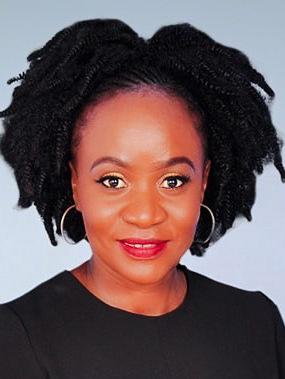
Sheila Joy Mulinya
Daystar University, Kenya
I am a Kenyan filmmaker and television producer with over 20 years of experience creating, scriptwriting, directing and producing media that critically engages with visual culture, representation and social narratives currently a lecturer at Daystar University. My career encompasses both practical production and academic mentorship, including teaching, supervising as well as guiding emerging scholars in visual media research and production. This dual expertise positions me to lead the Visual Culture Working Group in nurturing inclusive, innovative and globally relevant scholarship while strengthening networks and professional development opportunities for members across diverse contexts.
Throughout my career, I have led numerous film and television projects that interrogate social, cultural and political issues through the lens of visual culture. Complementing this practice, I have conducted research, presented papers and facilitated workshops that explore media representation, audience engagement and participatory production. These experiences have equipped me with the organizational, analytical and leadership skills necessary to support a Working Group that thrives on collaboration, critical inquiry, and scholarly excellence.
If elected as Vice-Chair, I will focus on four key priorities:
- Inclusive and high-quality programming: I will ensure conference sessions, workshops and seminars reflect a breadth of global perspectives, particularly augmenting voices from African and underrepresented visual culture contexts. This approach will create a platform for innovative scholarship and diverse methodological approaches.
- Active member engagement: I will maintain transparent and consistent communication with all members, encouraging dialogue, knowledge-sharing as well as collaboration. I will help to raise mentorship opportunities and support members in developing joint research and creative projects, ensuring participation is accessible and meaningful.
- Professional development and visibility: I will organize activities that will enhance members’ research and production profiles, encourage interdisciplinary partnerships and increase the global visibility of the Working Group. By connecting scholars and practitioners across regions, we can cultivate networks that strengthen both academic and professional trajectories.
- Strategic leadership and governance: I will contribute to association-wide decision-making and oversee all phases of conference programming with accountability and clarity, from reviewing abstracts to organizing on-site sessions. I will ensure that the Working Group operates efficiently and in alignment with IAMCR’s mission of promoting international scholarly exchange.
I am committed to building a VIC Working Group that is dynamic, inclusive and responsive to the ever-evolving backdrop of visual culture scholarship. By leveraging my practical experience in media production and my academic engagement in visual culture research, I aim to create meaningful opportunities for members to contribute, collaborate and grow professionally. My vision is a Working Group that promotes critical inquiry, nurtures emerging talent and also strengthens global networks for scholars and practitioners alike.
Thank you for considering my candidacy. I am eager to serve the Working Group and contribute to advancing its mission of promoting innovative research, critical dialogue and global scholarly exchange in visual culture.
Sincerely,
Sheila Joy Mulinya-PhD Candidate
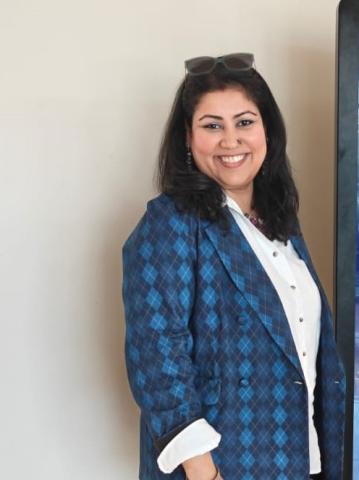
Meera Shirodkar
Bennett University, India
My academic and professional trajectory has been shaped by sustained engagement with cinema, visual culture, memory studies, and digital media, with a particular focus on the Global South. I hold a Master’s degree in Mass Communication with a specialisation in Audio-Visual Production from Symbiosis Institute of Media and Communication (Pune, India) where my early training in filmmaking and media practice cultivated my interest in visual storytelling, narrative construction, and the socio-cultural power of screen media. This practice-oriented foundation has significantly informed my research trajectory. I subsequently completed my PhD in Film from the University of Southampton, UK, where my work examined representations of Partition memory in contemporary Indian cinema.
As a researcher, I am interested in how visual narratives across film, digital platforms, and emerging media mediate relationships among the creator, the work, and the spectator, and shape cultural meanings, identities, and power structures. My broader research interests span feminist film theory, visual representations of trauma and memory, and evolving screen cultures, including OTT platforms and digital storytelling practices. I am particularly interested in how visual memory, archival practices, and cinematic historiography contribute to the construction of cultural identity, especially in contexts that negotiate or resist dominant global media flows. My work also engages with emerging visual and digital ecosystems, including intersections of digital humanities, AI-enabled archives, and new media storytelling, positioning visual culture within rapidly transforming technological environments.
My publication record includes journal articles in Scopus-indexed journals, an edited volume with Bloomsbury (Gender, Identity and Intersectionality in Global Screen Media), and several forthcoming chapters with international publishers, including Routledge and Edinburgh University Press. Across these contributions, I seek to advance comparative visual culture studies by foregrounding South Asian perspectives while engaging with broader transnational and interdisciplinary debates.
In addition to my research, I bring substantial experience in academic leadership and community building. I have served as Co-Convener of the Times School of Media–International Communication Association (TSOM-ICA) India Chapter International Conference 2026; Senior Coordinator of a national seminar in collaboration with the Ministry of Education, Government of India, and Co-Coordinator of a specialised short-term course developed with IN-SPACe (Department of Space, Government of India). I have also organised and moderated international academic events, including a symposium on Films, Gender and Sexuality in collaboration with the University of Southampton. These roles have strengthened my ability to curate interdisciplinary dialogues, manage conference programming, and facilitate sustained scholarly exchange across diverse institutional and geographical contexts.
If elected, I would contribute to the Visual Culture Working Group in three key ways. First, I aim to strengthen Global South and comparative perspectives by encouraging scholarship that foregrounds diverse visual traditions and marginalised narratives. Second, I would expand engagement with emerging visual media, including AI, immersive technologies (AR/VR), and digital storytelling, situating them within critical visual culture frameworks. Third, I would support inclusive academic programming through curated panels, collaborative initiatives, and mentoring opportunities for early-career researchers.
I believe the Visual Culture Working Group offers a vital space to rethink the role of images, narratives, and spectatorship in contemporary societies. I would be honoured to contribute as a researcher, organiser, and facilitator to support IAMCR’s intellectual and collaborative goals, and to the continued growth of the Working Group.
Thank you for your consideration.
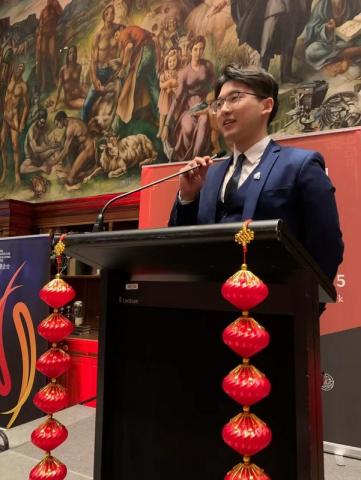
Yaohan (Quentin) Wang
Communication University of China
Dear VIC Working Group Members,
My name is Yaohan (Quentin) Wang, and I am a PhD candidate at the Communication University of China and a graduate of the University of Sydney. I am honoured to stand for the position of Vice-Chair of the Visual Culture (VIC) Working Group. My candidacy is built on a foundation of steadfast reliability, a proven track record in organisational governance, and a deep commitment to fostering an inclusive and sustainable scholarly community within IAMCR.
Leadership, Governance, and Operational Reliability
I believe that effective leadership in a Working Group requires a balance of vision and meticulous operational support. My experience as a representative at the 15th Australia-China Emerging Leaders’ Summit (ACELS) equipped me with the skills to facilitate high-level cultural dialogues and manage complex stakeholder expectations. At the Communication University of China, I have been deeply involved in the practical governance of academic life, from organising international symposiums to managing the logistical continuity of annual school-wide conferences. I understand that the success of the VIC group relies on the steady execution of abstract reviews, session programming, and member communication. I am fully committed to ensuring these processes are transparent, efficient, and consistent, providing reliable support to the Chair and the wider leadership team.
Research with a Focus on Community Relevance
My research examines the intersection of digital identity and visual representation. I have explored how visual aesthetics in digital platforms, such as character designs and cultural settings in Genshin Impact, shape self-recognition and cultural identity. By simplifying the theoretical complexities of digital subjectivity into actionable scholarly inquiries, I hope to lead discussions that are accessible and relevant to our diverse global membership. I am particularly interested in how our working group can collectively address the visual power dynamics inherent in AI-driven media, ensuring that various cultural perspectives from both the Global North and South are represented.
A Vision for Coordination and Continuity
My primary goal is to contribute to the long-term vitality of the VIC community. I bring a "techno-operational" toolkit—including proficiency in Python for data management and professional multimedia software for community outreach—to enhance our group’s digital presence and networking capabilities. I approach this role with a proactive and optimistic spirit, dedicated to building on the work of my predecessors while introducing sustainable methods for member engagement and collaboration. I am eager to work behind the scenes to ensure that every member of the Visual Culture Working Group feels supported and connected. I would be privileged to earn your support and dedicate my energy to the continued growth of our vibrant community.
More than anything, I see this role as an opportunity to contribute to a community that I truly value. I would welcome the opportunity to serve, to learn from others, and to help build a vibrant and connected space for visual culture research.
Sincerely,
Yaohan Wang
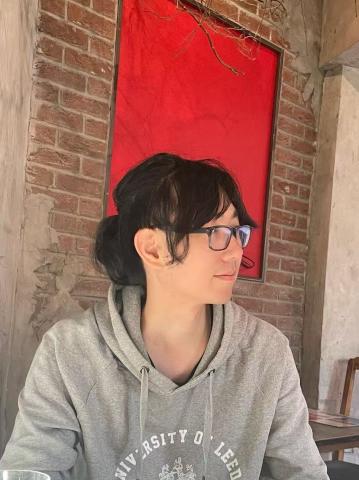
Zhaoyin Zhang
University of Limerick, Ireland
My research is situated at the intersection of visual culture, narrative studies, and digital media, with a particular focus on COTS videogames as complex audiovisual and interactive forms. Drawing on autoethnography, hermeneutics, textual analysis, and an interdisciplinary methodological toolkit, I examine how visual-interactive media construct cultural meaning, identity, and relational experience. My work also engages with questions of cultural memory, exploring how games archive, reshape, and transmit values, identities, and historical sensibilities through narrative and visual design. For example, I have examined how the single player campaign The Last Tiger in Battlefield V (EA DICE, 2018) reconstructs German WWII trauma for Generation Z players in China, highlighting how popular visual media mediate trauma memory across cultural contexts, reconfiguring it in ways that can renew awareness of its seriousness among audiences increasingly distanced from events such as the Holocaust and Nazism. This line of inquiry has benefited from engagement with cultural memory theory and has received encouraging feedback from Aleida Assmann.
Although my academic training is in Applied Linguistics, my research practice is deeply embedded in cultural and visual media studies. I approach COTS videogames not only as systems of play, but as visual and narrative artefacts that invite interpretation, affective engagement, and critical reflection. In this sense, my work aligns closely with VIC’s interest in the relationship between author, work, and spectator, particularly as this relationship evolves in interactive and digitally mediated environments.
I am particularly drawn to VIC’s commitment to global and comparative perspectives. My research engages with how cultural meanings and memories are produced, translated, and negotiated across contexts, and I am interested in fostering dialogue between scholars working in different regions and traditions. In related work, I have analysed the global reception of Black Myth: Wukong (Game Science, 2024), critically examining claims of seamless intercultural communication and proposing ways to enhance cultural legibility through more carefully curated narrative and textual design. I believe that expanding attention to interactive media such as COTS videogames, including VR as one of the platforms for their deployment, and other emerging digital forms can further enrich these conversations, especially as these media increasingly shape contemporary visual culture.
If elected, I would aim to contribute to VIC in three main ways. First, I would support the inclusion of interactive and game-based media within the Working Group’s scope, encouraging submissions that bridge visual culture, narrative, and digital interactivity. Second, I would promote interdisciplinary exchange by connecting scholars working across film, media, art, and game studies, fostering conversations that move beyond disciplinary boundaries. Third, I would actively support early-career researchers by helping to create inclusive and constructive conference spaces, particularly for those working in emerging or underrepresented areas.
I see VIC as a vital platform for engaging with the evolving landscape of visual and digital media. I would be honoured to contribute to its development as a space that not only reflects but actively shapes the future directions of visual culture research.