Gender, Climate Change and Disaster Resilience
Edited by IAMCR member Mausumi Bhattacharyya and Rajib Shaw, this book provides a thorough coverage of different topics related to climate change, disaster resilience and gender.
In this section we announce recently published books by IAMCR members to the IAMCR community. If you are a member of IAMCR and would like to have your recent book listed, send us a message...
Edited by IAMCR member Mausumi Bhattacharyya and Rajib Shaw, this book provides a thorough coverage of different topics related to climate change, disaster resilience and gender.
Written by IAMCR member By I. Arul Aram, this book examines the nuances of how the media conveys environmental issues, drawing on scientific facts and documenting grassroots realities, and influencing popular perceptions.
Edited by IAMCR member Jaka Primorac and Bård Kleppe, Miikka Pyykkönen, David Wright, this book gathers evidence and case studies from various parts of Europe and across the different sectors that comprise the creative industries, including the visual and performing arts, popular music, the platform economy, and film.
Written by Brett Caraway, this book explores the various schools of thought which have endeavored to understand the interactions between technological development, economic growth, and the movement of material and energy through biological and social systems.
Co-edited by Crystal Chokshi and IAMCR former president Robin Mansell, this book is about words that fool us into thinking that the digital technologies we use every day are beautiful, benign, and consequence-free.
Co-authored by Marína Urbániková, Klára Smejkal, Iveta Jansová and Lenka Waschková Císařová this book explores the state and future of public service media (PSM).
Authored by IAMCR member Minos-Athanasios Karyotakis, this book examines how and why societal actors may use different names to refer to the same territory. Karyotakis demonstrates the enormous symbolic power that the names of places can hold.
Democratising Spy Watching: Examines how public actors across Southern Africa have stepped in to oversee intelligence-driven digital surveillance where formal oversight mechanisms fall short. Co-edited by Jane Duncan, an IAMCR member, the book highlights public oversight as a critical response to expanding surveillance powers.
Mongrelisation: Reinterprets why diversity and inclusion matter by reclaiming the figure of the “mongrel” as a source of dignity and worth. By IAMCR member Colin Chasi, the book draws on African moral traditions such as Ubuntu and Maat to foreground hybridity, mixing, and crossing as central to human history and culture.
This book examines how sub-Saharan African journalists navigate secondary trauma from reporting violence and crises. Edited by IAMCR members Kealeboga Aiseng and Chikezie E. Uzuegbunam, it foregrounds care, resilience, and mental health in journalistic practice.
Mediating Imperfect AI explores how journalists emotionally and ethically navigate the integration of artificial intelligence in their work. Written by Carolina Escudero, the book advances a human-centred, critically reflective approach to AI beyond simple acceptance or resistance.
Written by IAMCR member Cherian George, this book draws on deliberative democracy, social psychology, memory studies, and international case studies to map grassroots efforts that challenge prejudice, counter hate, and reimagine a more inclusive democratic “we.”
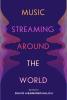
By IAMCR member David Hesmondhalgh, this book provides the first international account of how streaming is shaping music culture today by considering the implications of streaming platforms for the production, distribution, and consumption of recorded music around the globe.
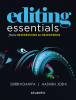
Editing Essentials explores editing practices and ethics across media platforms. Written by IAMCR member Surbhi Dahiya and Aashish Joshi, it offers practical guidance for today’s complex journalism environment.
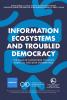
This open-access volume examines how news media, AI, and data governance shape contemporary democracies. Co-edited by IAMCR member Robin Mansell, it offers a critical, interdisciplinary assessment of information ecosystems.
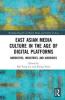
Edited by IAMCR members Dal Yong Jin and Kyong Yoon, this book explores how East Asian popular culture and digital platforms intertwine, highlighting the region’s growing global cultural influence and its role in shaping today’s platform-driven media landscape.
Written by IAMCR member Ama De-Graft-Aikins, this volume provides an interdisciplinary model for arts-based health communication, grounded in African contexts and supported by extensive research and visual documentation.
Edited by IAMCR member Emmanuel K. Ngwainmbi, this volume examines how misinformation and media dynamics shaped Covid-19 communication—revealing global challenges in information access, trust, and public understanding during pandemics.
This volume examines how Internet infrastructure reflects global power dynamics, governance, and resistance. Co-authored by IAMCR member Francesca Musiani, it offers a sharp interdisciplinary perspective on digital geopolitics and technological sovereignty.
Written by IAMCR member Wajiha Raza Rizvi, this volume critically examines key international political films and prose—from Eisenstein to Riefenstahl—highlighting how cinema constructs persuasion, power, and cultural narratives across history.
Against the backdrop of digital capitalism, this book by IAMCR member Christian Fuchs examines how war, violence, and peace are shaped through digital structures and global political economy—and asks whether genuine world peace remains achievable in our era.
Delving into the 2017 Dengvaxia scandal in the Philippines, this book by IAMCR member Karl Patrick R. Mendoza unpacks how media representation and politicized health narratives shaped public trust cultures—revealing complex interactions among journalism, populism, and democratic legitimacy.
Authored by IAMCR member Nadia Haq, this book critically examines how British journalism reinforces anti-Muslim bias and calls for rethinking journalism’s civic role in today’s digital, multicultural societies.
This book by IAMCR member Hanna E. Morris explores how U.S. media coverage post-2016 fuels reactionary climate narratives, limiting democratic responses. The author calls for inclusive climate journalism to counter antidemocratic, fear-driven discourse.
This book by IAMCR member Julie Reid reveals how sharing economy platforms like Airbnb enable online crime through “delusive speech”—deceptive content used by scammers—exposing systemic failures in trust, safety, and global content regulation.
This book by IAMCR member Mirca Madianou reveals how AI, biometrics, and big data perpetuate colonial power dynamics—reinforcing inequity, extracting data, and inflicting new forms of digital violence.

This book by IAMCR member Claire Konkes analyses how news and other media contribute to our expectations and hopes for the role of law during environmental conflict.

Written by IAMCR member Anastasia Denisova, this book explores the urgent challenges of communicating climate change in the media. It goes to the very heart of what makes humans care about stories enough to act.
Edited by IAMCR members Nelson Ribeiro and Barbie Zelizer, this critical and timely collection argues for the centrality of propaganda in discussions about the contemporary media landscape and its informational ecosystems.
This memoir, completed just before longtime IAMCR member Vincent Mosco’s sudden death, chronicles the last half century of research, activism and teaching in critical communication, technology and society from the perspective of one of its pioneering figures.
Edited by IAMCR members Anna Gladkova and Elena Vartanova, together with Shi-xu, this book looks at the rise of new digital divides and reveals how these inequalities affect cross-cultural communication from a cultural discourse studies perspective.
Edited by IAMCR member Abiodun Salawu and Kehinde Oyesomi, this volume highlights the benefits of using African languages in marketing communications, including increased understanding and resonance with the target audience.

Collaborative Change: Towards Inclusive Rural Communication Services is a collaboration between the Food and Agriculture Organization of the United Nations (FAO) and IAMCR. It showcases the work of IAMCR's Rural Communication Working Group and the FAO/IAMCR Rural Communication Services Research Awards.
By Nico Carpentier and Jeffrey Wimmer, this book is a theoretical reflection on the intersection of democracy and media through a constructionist lens.
This book, edited by Daniel Biltereyst and Ernest Mathijs, brings together contemporary and historical views on censorship, covering fifteen countries, including Argentina, France, Turkey, Japan and the United States.
By Daya Thussu, this book highlights the growing importance of digital communication in legitimizing and promoting the geopolitical and economic goals of leading powers. The ideas and arguments advanced in it privilege a reading of geopolitical processes and examples from the perspective of the global South.
By Raymond Archee and Myra Gurney, this book explains key communication concepts and effective strategies that students will use to communicate in their professional lives, no matter what career they ultimately choose.
By Maria Laura Ruiu and Massimo Ragnedda, this book analyzes and understands the complexity of digital poverty by considering its intersecting nature with socioeconomic and environmental poverty.
By Pradip Ninan Thomas, this book explores the topic of gig work in India’s digital political economy, and the relationship between key factors such as start-ups, state governments, and platform providers.
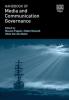
Edited by Manuel Puppis, Robin Mansell and Hilde Van den Bulck, this state-of-the-art Handbook provides unique insights into the governance practices and institutions shaping digitalized public spheres.
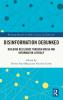
Edited by Divina Frau-Meigs and Nicoleta Corbu, this book explores the effective role of media and information literacy (MIL) in combating disinformation by collaborating with fact-checkers and developers. MIL can effectively tap into the knowledge and skills of these fields to combat disinformation.
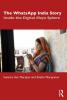
Sunetra Sen Narayan and Shalini Narayanan explore how WhatsApp has permeated the personal and professional lives of Indians, highlighting the diverse ways the app is utilised in social and business interactions, including individuals living with disabilities.
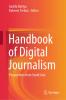
Edited by Surbhi Dahiya and Kulveen Trehan, this book presents a pioneering publication on digital journalism in South Asia. It highlights evolving best practices and analyzes digital technology's transformative impact on journalism.
By Maja Šimunjak, this book highlights journalists' emotional situations and stressors, presenting a pioneering guide for managing these stresses. It features firsthand accounts from journalists in Europe, the United States, and Australia, fostering awareness and practical strategies for emotional resilience in journalism.
Edited by Lisa Bradley and Emma Heywood, 'Journalism as the Fourth Emergency Service: Trauma and Resilience' explores how trauma reporting affects journalists, providing a toolkit to train them and practitioners in building resilience and readiness to handle trauma effectively.
By IAMCR Vice president Andrea Medrado, and IAMCR member Isabella Rega, this book analyses a South-to-South connection between media activists and artivists – artists who are activists – in the Global South.
Edited by Ole Marius Hylland and Jaka Primorac, 'Digital Transformation and Cultural Policies in Europe' examines and contrasts various digital cultural policies in Europe, offering insights into the evolving policy landscape and exploring the impact of digital culture on cultural policy frameworks.
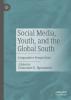
Edited by Emmanuel K Ngwainmbi, this book examines social media's impact on cyberbullying, sexting, and radicalization, highlighting its effects on young people's well-being. Contributors offer insights into adverse online experiences faced by youth.
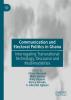
Edited by Eliasu Mumuni, Mark Nartey, Ruby Pappoe, Nancy Henaku, and G. Edzordzi Agbozo, 'Communication and Electoral Politics in Ghana: Interrogating Transnational Technology, Discourse and Multimodalities' examines communication and language in Ghanaian elections, highlighting cultural and socio-political influences on election discourse.
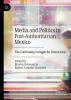
Edited by Martin Echeverria and Ruben Arnoldo Gonzalez, 'Media and Politics in Post-Authoritarian Mexico: The Continuing Struggle for Democracy' analyzes obstacles to Mexican media democratization, with insights from scholars in Mexico and the U.S., covering media systems, journalism challenges, and civil society's role in entertainment.