The Crisis, Security and Conflict Communication (CRI) Working Group will be holding online elections for one Chair position, for the term 2026–2030.
The elections will be held online from 13 to 27 May using the SurveyMonkey platform.
Individual members and representatives of institutional members in good standing who are also registered members of the Crisis, Security and Conflict Communication Working Group by 8 May are eligible to vote.
To verify if you are a member of the CRI Working Group, log in to your IAMCR account and select “My Sections and Working Groups” from the menu.
View the candidates and read their statements below.
More information and timeline are available at https://iamcr.org/s-wg/elections2026
Read more about the Crisis, Security and Conflict Communication Working Group
Candidates
- Sara Anwar, Minhaj University Lahore, Pakistan
- Minos-Athanasios Karyotakis, David C. Lam Institute for East-West Studies (LEWI), Hong Kong Baptist University (HKBU)
- Nathalie PIERRE-CHARLES, Collège Henri IV, Vaujours, France
Statements
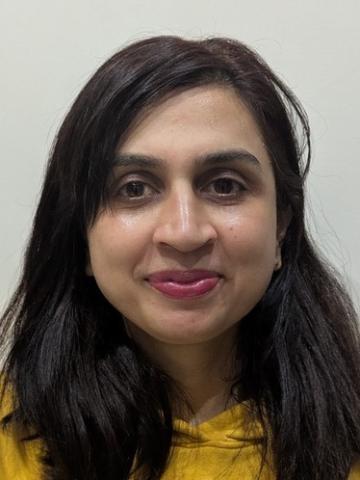
Sara Anwar
Minhaj University Lahore, Pakistan
I am honored to put forward my candidacy for the Chair position of the Crisis, Security and Conflict Communication (CRI) Working Group within IAMCR for the term 2026–2030. As an Assistant Professor with a sustained research focus on crisis and risk communication, and as an active member of both the CRI Working Group and the Conflict Communication group within IAMCR, I believe I bring the scholarly depth, cross-group perspective, and organizational commitment needed to lead this community forward.
My research sits at the intersection of crisis communication, risk perception, and media framing examining how political, environmental, and security-related crises are constructed, narrated, and contested in public discourse. A particularly urgent dimension of my current work concerns how Artificial Intelligence is transforming the narrative landscape of communication reshaping how crisis information is produced, distributed, and consumed, how disinformation spreads during moments of conflict and disaster, and how algorithmic systems influence public threat perception. I am convinced that AI's growing role in crisis and conflict communication is one of the defining scholarly challenges of this decade, and I am committed to making it a central intellectual thread within the Working Group's agenda.
My work deliberately resists instrumentalized, corporate-driven frameworks of crisis communication, instead grounding analysis in critical, theoretically informed perspectives that center questions of power, legitimacy, accountability, and democratic integrity. My dual membership in both the CRI Working Group and the Conflict Communication group has given me a broad vantage point on the landscape of crisis scholarship within IAMCR, allowing me to observe how overlapping conversations about conflict, security, risk, and scandal unfold across different sections without always finding a common forum.
Beyond IAMCR, I am an active member of a panel group within the National Communication Association (NCA), which has further deepened my engagement with communication scholarship at an international level and expanded my network across disciplinary boundaries. This cross-organizational experience equips me to represent the CRI Working Group's interests broadly and to build meaningful collaborative bridges between IAMCR and other leading scholarly communities.
If elected Chair, I will pursue three clear priorities. First, I will strengthen the Working Group's thematic programming at annual IAMCR conferences, with dedicated space for emerging topics including AI-mediated crisis narratives, computational propaganda, and platform governance during conflicts. Second, I will champion inclusive, globally representative participation actively recruiting scholars from the Global South whose research on local crises and insecurities remains underrepresented in international academic conversations. Third, I will pursue collaborative scholarly outputs special journal issues, working papers, and cross-group panels that elevate the group's visibility and collective intellectual contribution.
The CRI Working Group was founded on a commitment to rigorous, critically engaged, and democratically oriented scholarship on the most consequential communicative phenomena of our time. As Chair, I would be privileged to lead this community through a period of profound transformation in how crises are communicated, narrated, and understood.
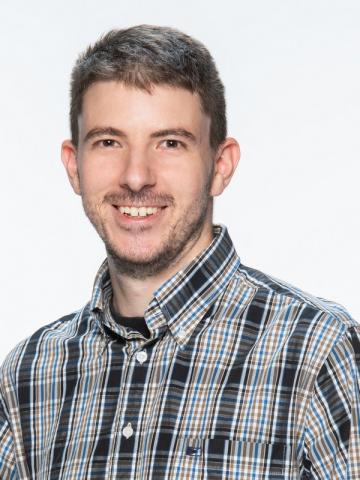
Minos-Athanasios Karyotakis
David C. Lam Institute for East-West Studies (LEWI), Hong Kong Baptist University
I am one of the current Vice-Chairs of CRI, an Associate Editor of Humanities & Social Sciences Communications, and a Postdoctoral Research Fellow at LEWI of HKBU with a prestigious grant by AXA Research Fund. I have published 1 monograph, 21 peer-reviewed publications as first author (12 in Q1 journals) & 10 publications as sole author, including publications in journals ranked in the 1% and 5% of the world based on CiteScore. Currently, I am researching environmental disasters, such as wildfires and water pollution, the impact of the Belt and Road Initiative (BRI) worldwide, and the dispute over Essequibo and the “Gulf of America” as part of a project on global territorial name disputes.
CRI is a fantastic platform and my home in IAMCR, with open-minded researchers and supportive academics who value diverse viewpoints and care about rigorous, impactful research, covering a broad range of topics, including crisis communication, security crises, conflicts, disputes, natural disasters, and cyberwarfare, amongst others. I have been a member of CRI since 2021, and attended almost every conference (in Kenya, France, New Zealand, & Singapore) since then.
As my research aligns with CRI's work, I have been an active and integral part of CRI. From chairing CRI’s sessions, participating in talks, contributing to and leading special issues, such as co-editing the one at Communication Review in 2025, and reviewing abstracts, to working more closely with current Chair Dr. Virpi Salojärvi and former vice chair Dr. Paul Reilly to support CRI in any possible way. Also, I had the honour and privilege of being elected last year as vice-chair of the group, alongside Dr. Mazlum Kemal Dağdelen.By following the lead of Dr. Salojärvi and respecting the good practices and previous work of Dr. Reilly and former Chair Dr. Jensen, we embarked on a new journey guided by the principle of keeping CRI WG a strong platform of Global South academic research and a meeting place for democratic discussion amongst Global South and North scholars of every possible CRI topic, while respecting each other.
In addition, based on the business meeting in Singapore, we created a new Google Group, a LinkedIn page, planned 2-3 talks/events about some impactful academic publications for 2026-2027, made preparations for having a special issue in an academic journal with the papers presented at Galway, and came up with an idea of a reading group which will aim to strengthen the research work of our members, especially of emerging scholars.
As I am educated in both Europe and Asia and currently based in Hong Kong, my research covers the Global South (Asia, Balkan Countries, Middle East, and South America) and the Global North. I hope by becoming Chair I can contribute to strengthening CRI with a global mindset, upholding it as a supportive and safe space for our members.
Thank you so much for your time and participation in the electoral process. If you have any questions or queries, please reach out to me via email at minosathkar@hkbu.edu.hk or visit my website: minoskar.net
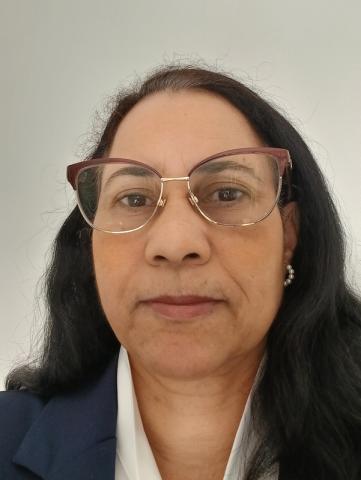
Nathalie PIERRE-CHARLES
Collège Henri IV, Vaujours, France
At a time when organizations are facing increasingly complex crises—simultaneously communicational, security-related, and human—it is essential to develop spaces for reflection capable of addressing these dimensions in an integrated manner. It is with this perspective in mind that I wish to submit my application for the position of Chair of the Working Group on crisis communication, security, and conflict.
Currently serving as Deputy Head of Institution, I am daily confronted with situations where sensitive communication issues, security imperatives, and conflict dynamics intersect. This hands-on experience at the core of organizational life has strengthened my ability to understand and manage complex situations, while also highlighting the need for structured, research-informed approaches to crisis management.
In parallel, my academic engagement has developed over several years. I have been involved for seven years in the Working Group “Ethics of Society and Ethics of Communication,” where I contributed to the review of academic abstracts. This role enabled me to develop strong methodological rigor, critical analytical skills, and a deep commitment to the quality and coherence of scholarly work. Additionally, my five years of university teaching have allowed me to guide students in addressing complex issues related to communication, organizations, and ethics, further reinforcing my academic grounding.
In a context marked by the rise of cyber threats, increased reputational risks, and the growing prevalence of internal conflicts, it has become essential to approach crises through an integrated lens. Communication, security, and conflict management are deeply interconnected and must be analyzed as part of a broader ecosystem. This Working Group represents a valuable opportunity to explore these interdependencies through rigorous and collaborative research.
Fully aware of the specific nature of a chair position, I am committed to a cooperative and balanced approach to leadership. I see chairing as a shared responsibility, based on complementarity, active listening, and construction. Such an approach is essential to fostering an inclusive and productive research environment, where each member’s contribution is valued and strengthened.
In the short term, my objective would be to support a coherent and progressive working dynamic, aligned with the association’s annual conference. This would include contributing to the structuring of the group’s research directions, supporting members in developing their contributions, and ensuring that the group’s work is effectively represented within the conference through panels or sessions. Beyond this, I would encourage the consolidation of contributions with a view to future collective outputs, such as publications or research reports.
I am also particularly interested in promoting interdisciplinary perspectives and addressing contemporary challenges, including digital environments, misinformation, and emerging forms of crisis.
Drawing on both my professional and academic experience, and strongly committed to collaborative work, I would be honored to contribute to the development and visibility of this Working Group as Chair.
Thank you for your consideration.
Yours sincerely,
PC .Nathalie (npierrecharles@gmail.com)