The Political Economy (POE) Section will be holding online elections for two co-Chair and one Vice-chair positions, for the term 2026–2030.
The elections will be held online from 13 to 27 May using the SurveyMonkey platform.
Individual members and representatives of institutional members in good standing who are also registered members of the Political Economy Section by 8 May are eligible to vote.
To verify if you are a member of the POE Section, log in to your IAMCR account and select “My Sections and Working Groups” from the menu.
More information and timeline are available at https://iamcr.org/s-wg/elections2026
Read more about the Political Economy Section
Candidates
Co-Chairs
- Randy Nichols, University of Washington Tacoma, United States
- Mandy Troeger, Södertörn University, Sweden
- Sanjay Verma, Bennett University, Times Group, India
Vice-Chairs
- Ana Bizberge, Pontificia Universidad Católica del Perú, Perú
- Sydney L. Forde, Annenberg School for Communication, University of Pennsylvania
- Sergio Sparviero, University of Salzburg, Austria
Statements
Co-Chairs
Randy Nichols
University of Washington Tacoma, United States
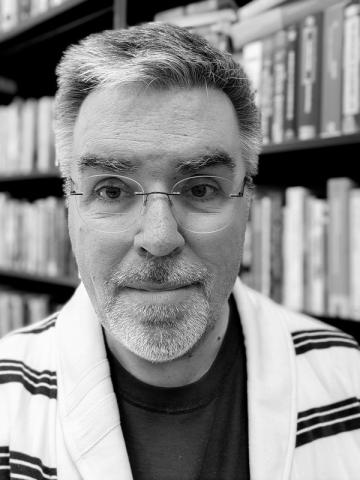
Dear members of the Political Economy Section,
I am excited to run for the position of Co-Chair of the division, which has been a vital space for my development as a scholar since I first attended in 2002. Since that time, the division has become one of the central pillars of my intellectual community, and, so, I would like to give back to that community by offering to serve as Co-Chair in order to continue the amazing work our leadership has undertaken.
I am currently serving as the Chair of a new multidisciplinary department, and that experience combined with my work with other organizations has prepared me well to help this division to continue to thrive. I have considerable experience working in conference organization and leadership, having served as both the Coordinator for the Union for Democratic Communications but also a conference organizer for several of their conferences. I’ve also worked with Mandy Tröger and the other members of the steering committee of the Network for Critical Communications Research in Germany to think about the challenges of starting and maintaining an organization focused on critical research.
I have been a regular reviewer for the division, and I also serve on the editorial board for our journal, the Journal of Political Economy. I would look forward to serving as a liaison between the journal and division leadership to continue to develop the journal and address the challenges maintaining it brings.
If I’m elected, one of my hopes would be to find ways to make the amazing work being done in political economy outside the English-speaking world and the Global North more visible, something leadership and the division have already made a priority. I would also be interested in working to help members work with or create their own organizations and systems to promote critical scholarship and to develop systems for leadership training. Finally, much of my work in other spaces has been to help emerging scholars and activists further the research and careers, and I would be excited to continue that work in this space.
I appreciate the deep history and well-established importance of this division, and I hope that you’ll allow me the honor of helping to shepherd it along. I would be deeply honored by your vote. Thank you for all you’ve done in making this division the amazing space that it is.
Randy Nichols (he/him) - Chair, Department of Culture, Arts & Communication
Mandy Troeger

Södertörn University, Sweden
The IAMCR Political Economy (POE) section is a rare space for researchers interested in the critical analysis of media and communication (markets) to meet. My own work has greatly profited from conversations I have had with IAMCR colleagues. We all care deeply about structural social injustices in media and communications; our work aims to make these injustices visible for the purpose of emancipatory change.
Over the past two years, I have had the privilege of serving as Vice-Chair of the POE section. Building on this experience, I would now like to step into the role of Chair to continue and further develop the work of the section. I am an Associate Professor and Wallenberg Fellow at Södertörn University, Sweden, and I am committed to strengthening international community and solidarity in these challenging times.
Having studied at the Institute of Communications Research at the University of Illinois at Urbana-Champaign, I am deeply indebted to scholars such as Inger Stole, Angharad Valdivia, Bob McChesney, John Nerone, and Dan Schiller. My work builds on their legacy. By applying their ideas to both historical and contemporary issues in media and communications, I situate myself within a long tradition of critical thought. However, this tradition is often marginalized or forgotten. One of my goals for the POE section is to strengthen and institutionalize this history, ensuring continued access to critical perspectives for both students and researchers.
Mandy Troeger
Sanjay Verma
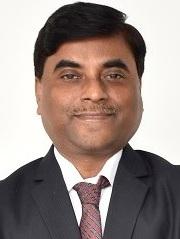
Bennett University, Times Group, India
Dear Sir/Madam,
I am Dr. Sanjay Verma, Associate Professor at the Times School of Media, Bennett University (Times of India Group), India. With over 25 years of combined academic and professional experience in journalism and media studies, I bring a unique practitioner-scholar perspective from the Global South to the Political Economy Section. I have been a paid-up IAMCR member and registered member of the POE Section since 2024.
My research and practice directly engage the core concerns of political economy: the structures of power that shape the production, distribution, and consumption of mediated communication. My most recent paper, “Social Media and the GenZ Protest: How Revolution is Redefining Digital Activism in South Asia,” presented at MEDCOM 2026 in Bali, examines how platform capitalism, algorithmic governance, and digital surveillance are reshaping protest movements in India and the region. This work analyses the political economy of visibility, digital labour, and resistance in postcolonial contexts — themes that sit at the heart of POE scholarship.
My professional background further strengthens this perspective. For 17 years I served as Senior Assistant Editor at Navbharat Times (Times Group), one of India’s largest Hindi dailies, where I witnessed first-hand the corporate consolidation of media ownership, editorial pressures, and the shifting economics of news production. I have published more than 2,500 articles, Op-Eds, and features across major Indian outlets, along with a series on science and environmental journalism in CSIR’s Vigyan Pragati. My PhD (Gurukul Kangri Vishwavidyalaya, 1999) focused on Science Journalism of the Arya Samaj, and I have authored books on environmental challenges and media history.
As Co-Chair, I would prioritise three goals:
- Amplifying Global South voices — actively mentoring early-career scholars from Asia, Africa, and Latin America and ensuring POE panels reflect decolonial and transnational perspectives on platform power and media labour.
- Bridging academia and practice — organising panels and pre-conferences that bring journalists, activists, and policymakers into dialogue with POE researchers.
- Expanding digital political economy research — developing thematic streams on social media activism, data colonialism, and the political economy of GenZ protest movements.
I am committed to the collaborative, inclusive ethos of IAMCR and to strengthening the Section’s role in advancing critical scholarship on power and communication. I look forward to serving the POE community and contributing to its intellectual leadership for the 2026–2030 term.
Thank you for your time and for facilitating these important elections.
Warm regards,
Dr. Sanjay Verma
Vice-Chairs
Ana Bizberge
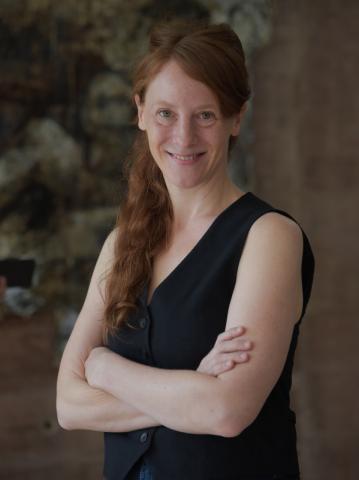
Pontificia Universidad Católica del Perú, Perú
Dear Members of the Selection Committee,
I am writing to express my interest in the Vice-Chair position of the IAMCR Political Economy Section.
I am an Argentine scholar currently based in Peru, where I have been working since 2025 as a faculty member and researcher at the Pontificia Universidad Católica del Perú (PUCP). I was trained and developed my academic career in Argentina, working alongside leading scholars in the field across Latin America. I have also undertaken several academic stays in Canada, Spain, Brazil, and the United States. These experiences have shaped my international perspective and strengthened my commitment to collaborative research across regions.
I have been an active member of the Political Economy Section for over ten years. During this time, I have closely followed and contributed to its intellectual development through participation in conferences, discussions, and collaborative initiatives. This long-standing engagement has allowed me to gain a deep understanding of the section’s trajectory, as well as its current challenges and opportunities.
Importantly, my participation in the section has enabled me to build and expand a strong network of professional relationships with colleagues from different regions. I would welcome the opportunity to consolidate and further strengthen these connections in the role of Vice Chair, while also fostering spaces that encourage early-career researchers to engage with the section and benefit from similar opportunities for collaboration and exchange.
In terms of my potential contributions, I believe my profile can support the section in several ways. As an Argentine researcher based in Peru, I can contribute to strengthening regional participation and expanding the section’s presence in underrepresented contexts, particularly in Latin America. I am especially interested in promoting greater inclusion and encouraging more active involvement from colleagues across the region, as well as fostering Global South–South interactions and collaborative networks that can enhance knowledge exchange, comparative research, and collective visibility beyond traditional North–South dynamics.
Additionally, I bring editorial experience as Latin American Editor of the Journal of Digital Media Policy. This role has given me insight into global academic publishing and dissemination processes, which I see as an opportunity to enhance the visibility of research produced within the section and to promote contributions from diverse geographical and intellectual contexts.
As a Latin American woman scholar, I am also committed to advancing diversity and inclusivity within the section. While I recognize the progress made in recent years, I believe it is important to continue strengthening representation in a field historically dominated by male perspectives, and I would be glad to contribute to these ongoing efforts.
Finally, I am interested in strengthening the section’s connections with other academic networks. Building stronger ties with associations such as ULEPICC and ALAIC could foster new opportunities for collaboration, joint initiatives, and broader international engagement.
In sum, I would be honored to contribute to the section as Vice Chair, supporting its continued growth, inclusivity, and global relevance.
Thank you very much for your consideration.
Ana Bizberge <anabizberge@gmail.com>
Sydney L. Forde
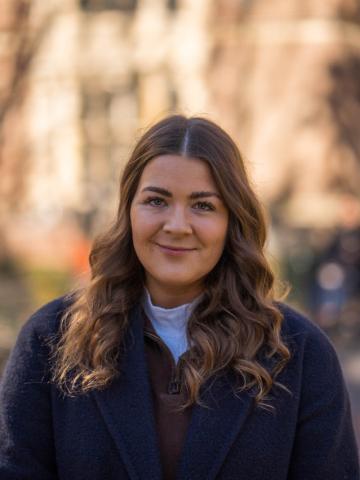
Annenberg School for Communication, University of Pennsylvania, USA
My name is Sydney Forde and I am a postdoctoral fellow at the Media Inequality and Change (MIC) Center at the Annenberg School for Communication at the University of Pennsylvania, and I am excited for this opportunity to run for vice-Chair of the Political Economy Section of IAMCR. As an early-career scholar working firmly in the critical political economy of communications (CPEC), I see this role not simply as a professional opportunity, but as a responsibility to help sustain and strengthen a field that has been foundational to my intellectual development.
My research sits at the intersection of media policy, telecommunications, and journalism, with a consistent focus on how structural inequalities shape communication systems. In all of my work - from analyses of broadband policy and media concentration to critiques of public media governance and journalism policies - I have sought to foreground the continued relevance of the CPEC approach.
As I navigate the uncertain world of academia as a critical scholar dedicated to the political economic analysis of communications, my work has increasingly emphasized the need to reflect on the conditions under which our field itself operates. In recent public-facing scholarship, I have argued with co-authors that scholars of CPEC must renew their collective commitments and build stronger forms of international solidarity in the face of growing political and economic pressures. In an era marked by austerity, rising authoritarianism, and the intensification of corporate power, the fragmentation of political economic scholarship is a risk we cannot afford. Instead, we must work across borders, institutions, and traditions to sustain a vibrant and politically engaged intellectual community, which is precisely what I believe IAMCR provides.
As Vice-Chair, I would prioritize initiatives that strengthen these dimensions of the Political Economy Section. This includes fostering greater collaboration across geographic regions, advocating for the support of early-career scholars and graduate students, and creating spaces - both formal and informal - for intellectual exchange, mentorship, and debate. I am particularly committed to expanding opportunities for scholars from underrepresented and structurally marginalized backgrounds, recognizing that the future of the field (as well as our collective critique) depends on our ability to reflect and engage with a diversity of experiences and perspectives.
I am a Canadian scholar currently located in the United States, but I highly value international collaborations beyond the North American and European bubbles. I would be thrilled to help organize the Political Economy Section of IAMCR, which I feel works as a crucial hub for connecting existing scholars - as well as introducing new scholars - to the wide range of international expertise that our section hosts.
At a moment when critical scholars across the globe are facing mounting challenges, I believe strongly in the importance of collective organization, intellectual solidarity, and developing spaces of support. As an emerging scholar myself, I am deeply aware of the value of the communities that have sustained me - and I am committed to contributing to and expanding those communities for others.
It would be an honour to serve the Political Economy Section in this capacity.
In solidarity,
Sydney Forde
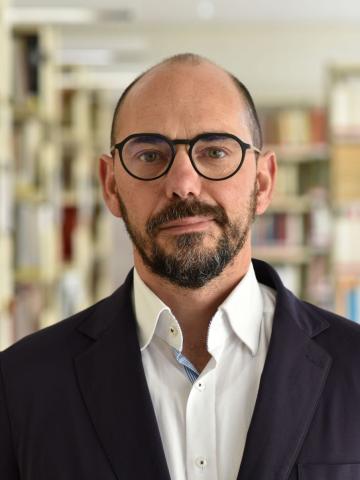
Sergio Sparviero
University of Salzburg, Austria
I am pleased to stand for election as Vice-Chair of the IAMCR Political Economy section. I am an Associate Professor at the University of Salzburg, and I would welcome the opportunity to contribute in a new way to a section that has played an important role in my academic career. I have been attending IAMCR conferences since 2005, beginning with Taipei, and over the years I have valued this section not only as a space for rigorous scholarship and international exchange, but also as a community through which I have met many colleagues I now consider friends.
My research and teaching focus on media policy, media economics, and the political economy of communication. I study media and platforms, especially in sectors such as news, audiovisual content, and music. I am also interested in alternative and emerging organizational forms, including non-profit and hybrid models, and in the wider social consequences of innovation and change in media and communication systems. I see political economy as essential for understanding how power, ownership, control, and inequality shape media and communication systems across markets, institutions, technologies, and forms of cultural production.
Over the years, I have been involved in a number of important academic and research initiatives that connect closely with the concerns of this section, including the Global Media and Internet Concentration Project (GMICP), the MA in Digital Communication Leadership (DCLead), the Digital News Report (DNR) network, and, more recently, the Revisioning Public Interest Media (RePim) Marie Skłodowska-Curie (MSCA) Doctoral Network. These experiences have also been shaped, directly or indirectly, by the networks, conversations, and collaborations made possible through IAMCR.
Alongside my academic work, I bring extensive experience in academic administration and in organizing scholarly events and collaborative projects. I see the role of Vice-Chair as one of service: supporting the section’s activities, helping maintain a collegial and inclusive environment, encouraging the participation of early-career scholars and diverse scholarship, and strengthening connections with related academic events and networks. More broadly, I would like to contribute to the continuity and quality of the section’s work.
My candidacy is motivated both by gratitude and by commitment: gratitude toward a section that has contributed significantly to my professional path, and commitment to helping continue the excellent work of the current and past committees. If elected, I will work to ensure that the Political Economy section remains a central forum for advancing the concepts, methods, and critical perspectives needed to understand, and challenge, the influence of corporate power in communication.